11-MONTH BUILDER WARRANTY INSPECTION
A clear record before your builder-warranty deadline.
Witness Point examines visible and accessible conditions in your home, creating a written record before applicable first-year builder-warranty deadlines.
Check the dates and notice requirements in your warranty documents.
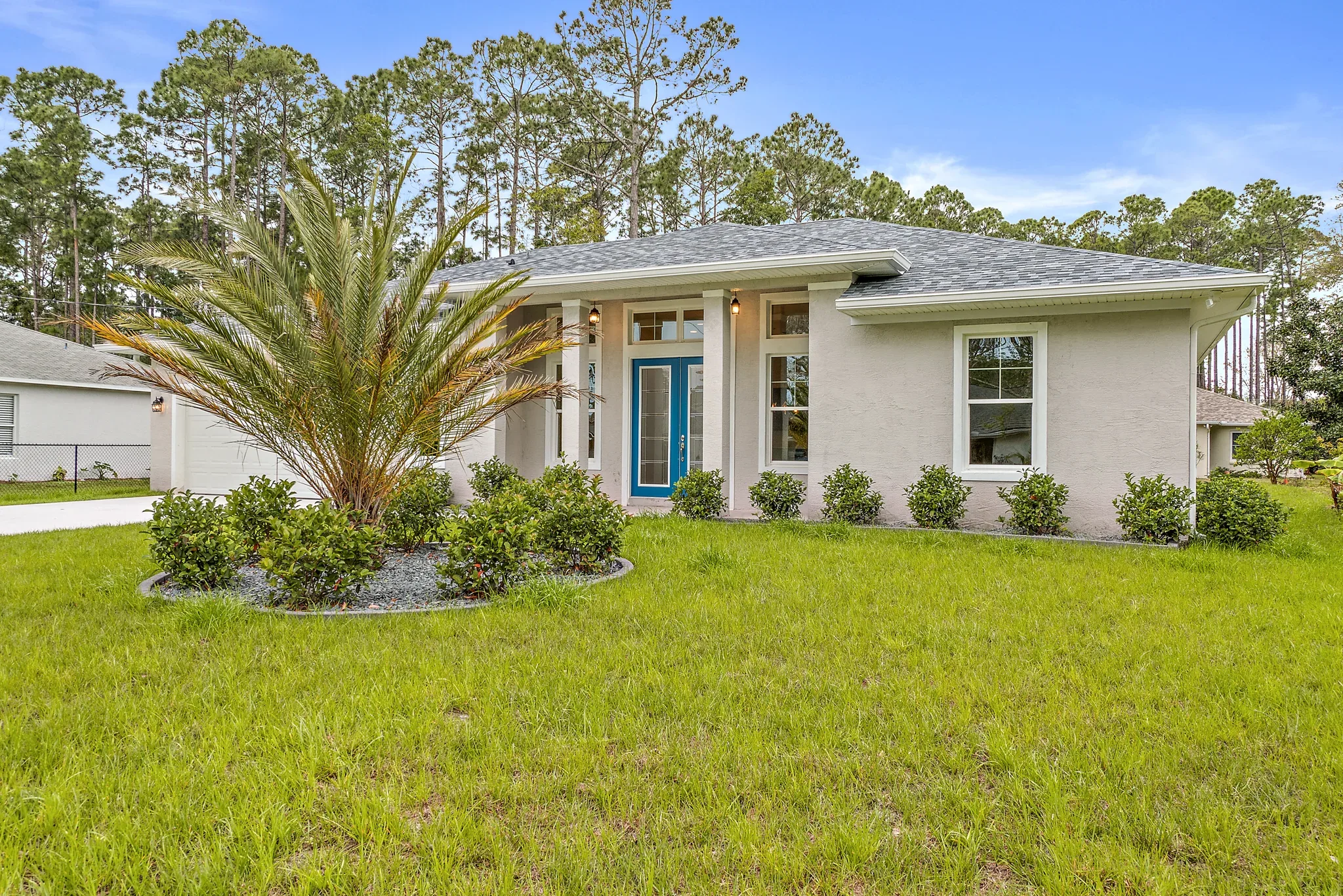
WHEN TO SCHEDULE
Start with your warranty dates, not the name of the inspection.
“11-month” describes a later inspection point. Check the warranty documents early and leave time for the visit, report review and any required notice before an applicable deadline.
Warranty start and deadlines
Confirm when the relevant coverage began and which deadlines apply. Do not assume the clock started on the day you moved in or that every part of the home has the same coverage period.
Notice and submission
Check who must receive your concerns, how they must be submitted and what supporting information is required. An inspection appointment is separate from that process.
Access and operating conditions
Arrange permission and clear, safe access to the areas and components being inspected. Identify unavailable utilities, shut-down equipment or areas that cannot be reached.
Earlier concerns and records
Keep notes about concerns you have noticed, where they occur and when you noticed them. Earlier reports and correspondence can provide context; the inspection records what can be observed now.
A concern has appeared? Report it now.
Follow the applicable reporting procedure rather than waiting for month eleven. Urgent safety concerns or active damage need prompt attention.
MAJOR SYSTEMS & COMPONENTS
The home's current condition is the starting point.
The inspection considers major installed systems and visible, accessible components in the home as it stands. It is a current inspection, rather than a return limited to items from an earlier report.
Visibility, safe access, operating conditions and the agreed scope determine what can be evaluated.
- 01
Structure & foundation
Visible foundation and structural components, including framing that remains exposed and accessible.
- 02
Roof & attic
Visible roof coverings and related components, together with accessible attic conditions.
- 03
Exterior & openings
Visible exterior wall coverings, doors, windows, trim and attached exterior components.
- 04
Site & drainage
Visible grading, surface drainage and other site conditions where they may affect the home's structure.
- 05
Electrical
Accessible electrical service and distribution components, with installed lighting, switches and receptacles within the inspection scope.
- 06
Plumbing & water heating
Visible plumbing and water-heating components, including accessible piping, fixtures and faucets.
- 07
Heating & cooling
Installed heating and cooling equipment and visible air-distribution components.
- 08
Interior components
Visible interior surfaces and installed components, including doors, windows and cabinetry.
These categories describe the inspection framework, not warranty coverage. The inspection agreement will define the service-specific scope, exclusions and limitations.
11-MONTH INSPECTION AT A GLANCE
A visual guide to the home in use.
The numbered points connect the inspection framework to visible and accessible areas of a completed home. The illustration shows exterior and interior context without implying access to concealed construction.
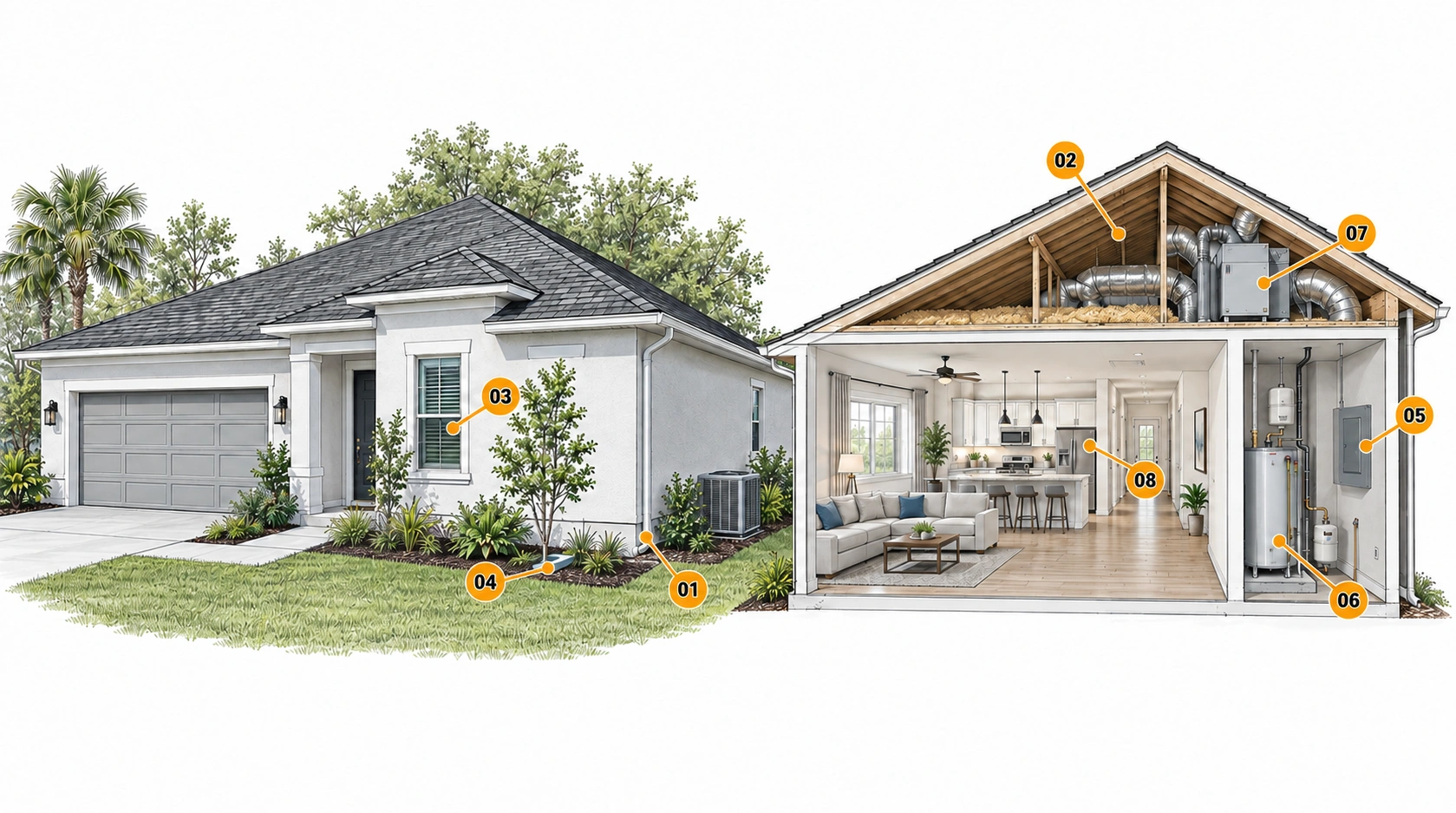
- 01Structure & foundation
- 02Roof & attic
- 03Exterior & openings
- 04Site & drainage
- 05Electrical
- 06Plumbing & water heating
- 07Heating & cooling
- 08Interior components
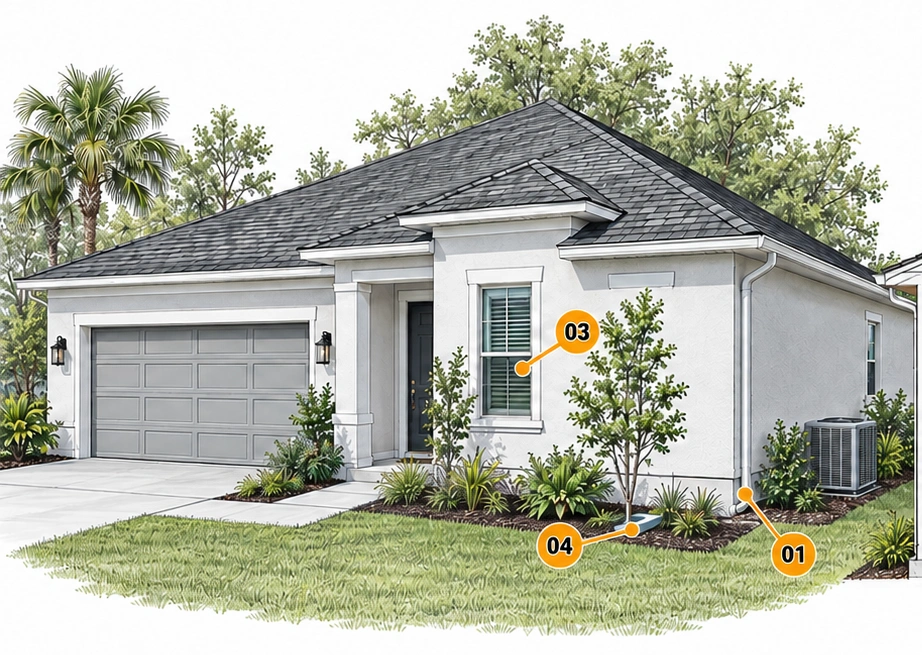
EXTERIOR + SITE
- 01Structure & foundation
- 03Exterior & openings
- 04Site & drainage
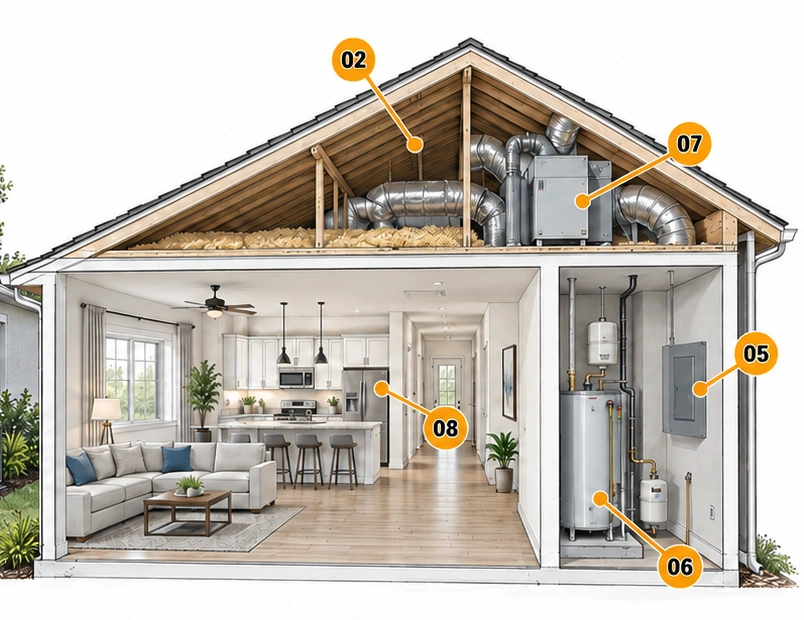
INTERIOR + SYSTEMS
- 02Roof & attic
- 05Electrical
- 06Plumbing & water heating
- 07Heating & cooling
- 08Interior components
A current observation does not, by itself, establish when a condition began.
WHAT THE INSPECTION CAN ESTABLISH
Observed conditions, with the limits stated.
A current inspection can document what is visible and accessible at the visit. It cannot answer every question about concealed work, earlier conditions or future performance.
Visible conditions
Finished surfaces are not opened to recover an earlier view of concealed construction. Furniture, storage, locked areas and unsafe conditions can also restrict access.
Normal operation
Where appropriate to the agreed scope and safe conditions, installed systems are checked through normal operating controls. This is not exhaustive testing of every mode or design performance.
Unavailable or intermittent conditions
A concern may not be observable during the visit. Present components that cannot be inspected or operated are identified with the reason, rather than treated as satisfactory results.
Time and cause
Earlier records may provide context, but a current observation alone does not establish when a condition began, what caused it or whether it has changed since closing.
The inspection does not determine or enforce warranty coverage, guarantee builder correction, certify code compliance or engineering adequacy, or predict every future condition.
HOW WITNESS POINT COMMUNICATES
Findings, documented.
The written record separates what was observed, why it matters in practical terms and the appropriate next step.
OBSERVED
The condition and its location.
What was visible at the inspection visit, with the location identified and relevant limits stated.
WHY IT MATTERS
The practical significance.
Why the observed condition warrants attention, without assuming warranty coverage or more than the inspection establishes.
NEXT STEP
The appropriate action or further evaluation.
Correction, monitoring or evaluation by a qualified specialist, where the observed condition calls for it.
Limitations belong in the record.
Present systems or components that were not inspected are identified with the reasons. An unavailable view or check is a limitation, not a satisfactory inspection result.
AFTER THE INSPECTION
Use the report. Follow the warranty process.
The report gives you an inspection record to refer to when raising concerns. The required notice and submission steps remain separate.
Check the requirements
Confirm where concerns must be sent, the information required and the relevant deadlines in your warranty documents.
Refer to the findings
Identify the concern and relevant report items. Provide the report or supporting material as the applicable procedure requires.
Keep your records
Retain what you submitted, the date, any confirmation of receipt and subsequent correspondence.
Booking an inspection or receiving a report does not by itself satisfy a warranty notice requirement or extend a deadline.
11-MONTH INSPECTION QUESTIONS
Before you arrange the inspection.
Answers about timing, earlier inspections, warranty coverage and the written record.
Do I have to wait until the eleventh month?
No. The name describes an inspection point, not a required appointment date or universal warranty deadline. Check the relevant start date, coverage periods and notice requirements early enough to arrange the visit and review the report.
Should I wait for the inspection to report a concern?
No. Follow the applicable reporting procedure when you notice a concern and keep a written record. An inspection is not a reason to delay notice. Urgent safety concerns or active damage need prompt attention.
Can I arrange this without an earlier Witness Point inspection?
Yes. A previous Witness Point inspection is not required. This visit documents current visible and accessible conditions within its agreed scope.
An earlier report may provide context, but this inspection cannot recreate an earlier open-wall view or establish an undocumented condition at closing.
Does the inspection determine what my builder must cover?
No. The report documents observed conditions. It does not determine warranty coverage, enforce obligations or guarantee correction. Coverage and notice requirements depend on the applicable warranty and law.
Is the report itself a warranty claim?
Do not treat it as one. Follow the applicable notice and submission procedure. Booking the inspection or receiving its report does not by itself establish that a claim was submitted, received or accepted.
Can you prove that a condition developed after closing?
Not from a current observation alone. Earlier records may support a comparison, but a dated inspection report records what was observed at that visit. It does not automatically establish when a condition began or what caused it.
Will this identify every defect or cosmetic item?
No. The inspection is limited by its scope, visibility, safe access and operating conditions. It is not an exhaustive paint, finish or contract-selection audit, and it cannot guarantee that every concealed or intermittent condition will be found.
Does Witness Point perform repairs?
No. Witness Point does not perform or offer repairs on homes it inspects. The company is paid to observe, inspect, document, and report, without a repair interest tied to what the inspection finds.
READY TO SCHEDULE?
Know what you are accepting before the decision is final.
Before an applicable first-year warranty deadline, arrange an independent inspection to document your home's current visible and accessible conditions.