CONDO UNIT INSPECTION
A closer look inside the condo you’re buying.
Witness Point examines the unit’s visible and accessible systems and components, then documents observed conditions and appropriate next steps in a written report.
An inspection focused on the unit, not an assessment of the entire condominium building.

THE UNIT INSPECTION BOUNDARY
Your unit, within a larger building.
A condo contains familiar home systems, but the inspection boundary needs particular care. What can be inspected, what you own and who maintains it are different questions.
The drawing highlights one unit and places it beside neighboring units and a shared corridor. The four points explain locations and boundaries, not defects or inspection results.
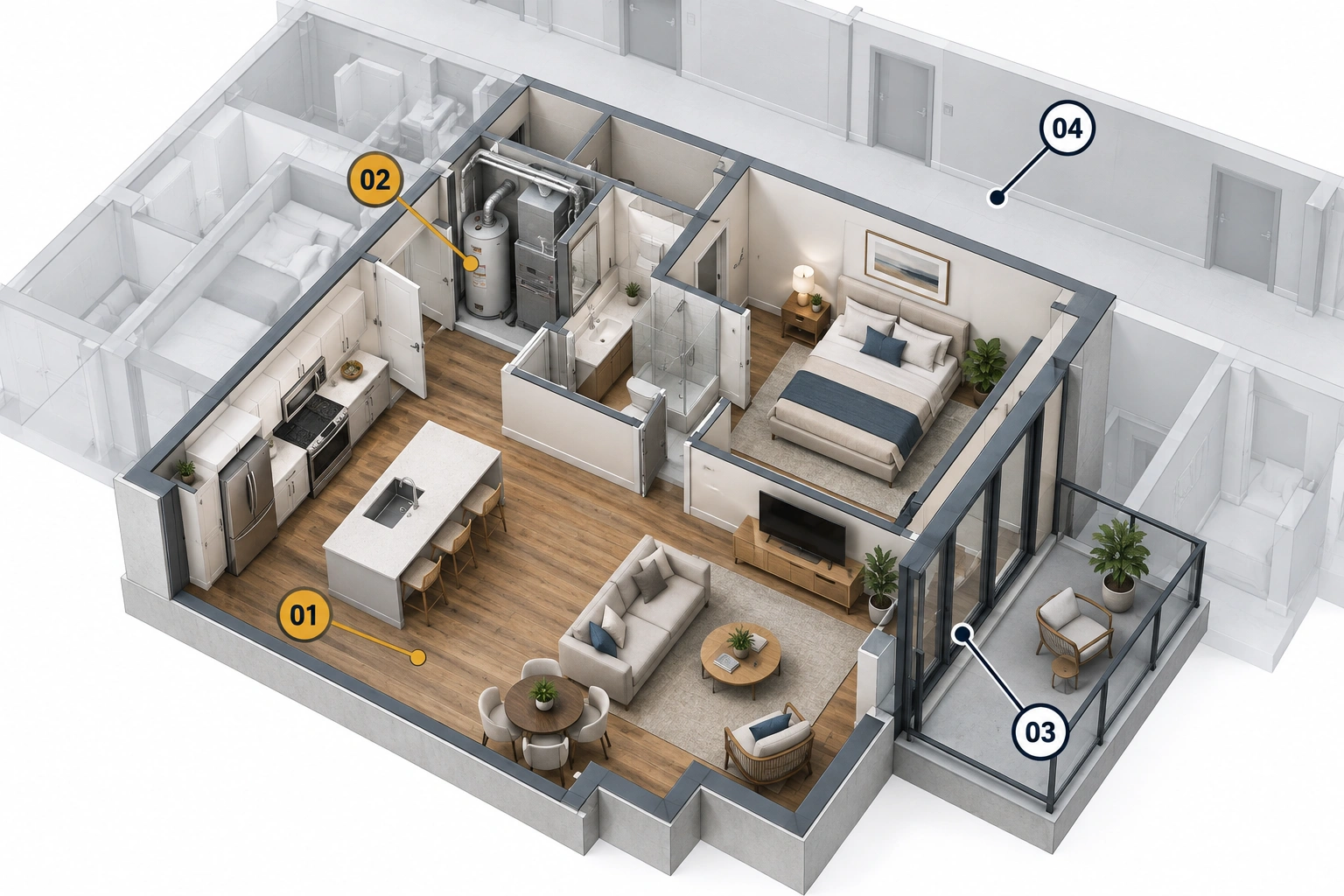
- 01
Inside the unit
The living spaces, interior finishes and accessible installed components are the focus of the unit inspection. Finished construction is not opened to expose what is concealed.
- 02
Equipment serving the unit
The drawing shows a water heater and heating or cooling equipment in a closet. Actual equipment may be elsewhere. Its location, the agreed scope and safe access need to be established.
- 03
Openings and exterior connections
Windows, exterior doors and balconies meet the building boundary. Their location alone does not establish ownership, maintenance responsibility or what the unit inspection includes.
- 04
Shared building context
The corridor and neighboring units show the surrounding building. Common areas and shared building systems are outside this unit inspection, rather than treated as inspected.
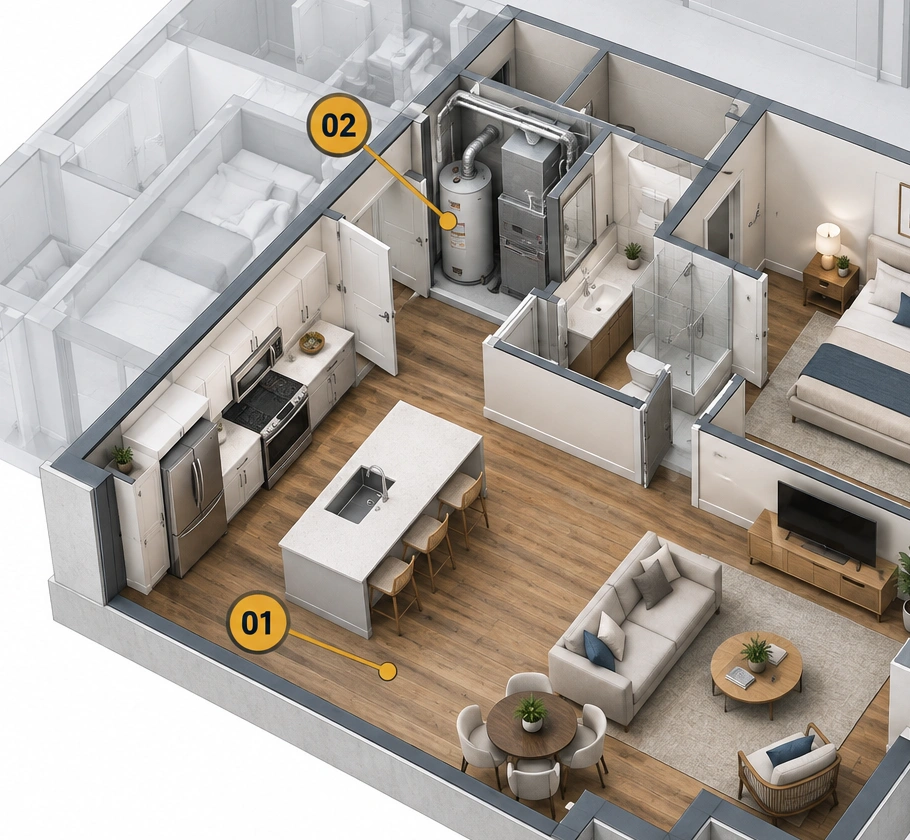
INSIDE THE UNIT + UNIT-SERVING EQUIPMENT
- 01
Inside the unit
The living spaces, interior finishes and accessible installed components are the focus of the unit inspection. Finished construction is not opened to expose what is concealed.
- 02
Equipment serving the unit
The drawing shows a water heater and heating or cooling equipment in a closet. Actual equipment may be elsewhere. Its location, the agreed scope and safe access need to be established.
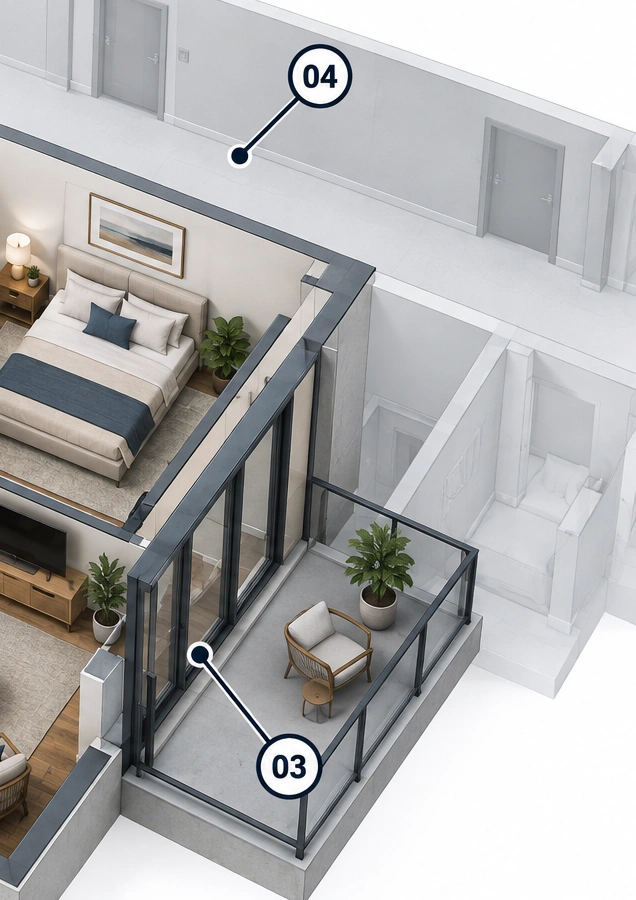
EXTERIOR CONNECTIONS + SHARED CONTEXT
- 03
Openings and exterior connections
Windows, exterior doors and balconies meet the building boundary. Their location alone does not establish ownership, maintenance responsibility or what the unit inspection includes.
- 04
Shared building context
The corridor and neighboring units show the surrounding building. Common areas and shared building systems are outside this unit inspection, rather than treated as inspected.
Conceptual illustration only. Colors and cutaway edges do not define a real property’s legal boundaries or maintenance duties. The drawing does not show an inspected property, establish permission to enter, or expose concealed work. It is not an engineering drawing or code certification.
The property documents and the inspection agreement have different jobs.
The condominium documents and applicable law establish ownership and maintenance responsibilities. The inspection agreement defines the service’s scope, exclusions and limitations. Neither is replaced by this drawing.
VISIBLE + ACCESSIBLE
What the unit inspection considers.
The inspection considers the following systems and components where they apply to the unit and fall within the agreed scope. Visibility, safe access and operating conditions determine the extent of evaluation.
Interior surfaces and components
Visible walls, ceilings and floors, along with interior doors, cabinetry and countertops. Concealed construction remains outside the available view.
Electrical
Accessible electrical panels and visible wiring serving the unit, with installed lighting, switches and receptacles within the inspection scope.
Plumbing and water heating
Visible supply and drainage components, fixtures and faucets, and accessible water-heating equipment serving the unit.
Heating and cooling
Installed heating and cooling equipment serving the unit, normal operating controls and visible air-distribution components.
Windows and exterior doors
Visible and accessible window and exterior-door components within the confirmed unit inspection scope. Observation does not decide who maintains or replaces them.
These categories are an overview, not an exhaustive checklist. Appliance coverage and any other applicable installed components follow the agreed scope.
Where appropriate and safe, installed systems are checked using their normal operating controls. The inspection does not exhaustively test every mode or certify design performance.
WHEN TO SCHEDULE + WHAT TO PREPARE
Plan around your dates and the building’s access.
Arrange the inspection as early as practical after your offer is accepted and access can be coordinated. Leave time to review findings and arrange further evaluation before the relevant purchase deadline.
Your purchase-agreement dates
Confirm inspection, notice and response deadlines with your real estate agent or attorney. Condominium-document review may involve separate requirements. The closing date is not the only date to consider.
The correct unit and entry arrangements
Have the property address, unit number and building or community name available. Confirm permission, entry arrangements and any applicable building requirements with the seller, agent or association.
Equipment, utilities and restricted areas
Identify known equipment locations, unavailable utilities and locked or restricted areas before the visit. Access to the unit does not automatically provide access to every component serving it.
Do not rely on an inspection appointment or report to extend a deadline.
SEPARATE QUESTIONS. CLEAR LIMITS.
The unit report is one part of your purchase review.
A visual inspection provides a record of the unit’s observed condition. It does not answer every question about the building, the association or the purchase.
Visibility and access
Furniture, stored belongings, locked areas, unsafe conditions and unavailable utilities can restrict evaluation. Present systems or components that were not inspected are identified with the reasons.
Building-wide condition
This service is not an association-wide structural assessment, a milestone inspection or a structural integrity reserve study. It does not certify the building’s structural adequacy or replace those separate reviews.
Association documents and finances
Legal interpretation of condominium documents, budgets, reserve funding and special-assessment exposure is outside this service. Obtain the relevant records and appropriate advice separately.
Conditions beyond the visit
Finished materials are not removed to investigate concealed construction. Intermittent conditions may not appear during the visit, and systems can change afterward. The report is not a guarantee of future performance.
An inspection limitation is not a satisfactory result. A unit report is not a clearance of the whole building.
HOW WITNESS POINT COMMUNICATES
Findings, documented.
The written report records the unit’s observed conditions and the inspection’s limits. Clear reporting separates the condition, its practical significance and the appropriate next step.
OBSERVED
The condition and its location.
What was visible at the inspection visit, including significant deficiencies and relevant limits on the observation.
WHY IT MATTERS
The practical significance.
Why the observed condition warrants attention, without assuming what concealed work contains or who is legally responsible.
NEXT STEP
The appropriate action or further evaluation.
Correction, monitoring or evaluation by a qualified specialist, where the observed condition calls for it.
Keep the finding separate from responsibility for the repair.
An issue observed inside a unit does not, by itself, establish its source or who must pay to address it. Review the findings alongside the relevant property documents and obtain appropriate advice.
Discuss purchase-related responses with your agent or attorney. The report does not order the seller or association to make repairs, guarantee a credit, or decide whether you should close.
Witness Point reports to you and does not perform or offer repairs on homes it inspects.
CONDO INSPECTION QUESTIONS
Before you arrange the inspection.
Answers about timing, access, shared components, the written report and separate association reviews.
When should I arrange a condo inspection?
Arrange it as early as practical after your offer is accepted and access can be coordinated. Leave time to review findings and arrange any recommended further evaluation.
Confirm the relevant inspection and notice deadlines with your agent or attorney. Condominium-document requirements are separate; there is no single inspection period that applies to every purchase.
Are windows, exterior doors and balconies included?
Confirm the scope for the property before the visit. Some accessible components may fall within the unit inspection; others may be common or limited common elements. Exclusive use does not by itself establish ownership or maintenance responsibility.
Do not assume that every window, exterior door or balcony has the same classification. The applicable documents, inspection scope and safe access need to be considered separately.
What if equipment serving the unit is outside it?
Tell us where the equipment is located and about any access restrictions before the visit. A unit-serving component outside the living space is not automatically included or excluded solely because of its location.
Its relationship to the unit, agreed scope, permission and safe access must be established. This does not extend the service to shared building machinery or a building-wide assessment.
Does this replace a milestone inspection or reserve study?
No. A milestone inspection addresses the building’s structural condition, while a structural integrity reserve study addresses funding for future major repairs and replacement. They serve different purposes from an individual unit inspection.
This service does not perform those reviews, assess the entire building or determine whether the association has met its obligations.
What if access is restricted or utilities are off?
Tell us about known restrictions before the visit. Visible conditions may still be documented, but an unavailable area or system cannot be evaluated as though it were accessible and operating.
The report identifies present systems or components that were not inspected and explains why. The appropriate timing and extent of the visit depend on the available conditions and agreed scope.
Will you review the association’s documents and finances?
No. Legal interpretation of the declaration, association rules, budgets, reserve funding and possible assessments is outside the unit inspection. Identifying information needed to confirm inspection access or scope is different from performing a legal or financial review.
Obtain the applicable condominium documents and available building reports through the seller or appropriate association contact. Discuss their significance and any document-related deadline with your agent, attorney or other qualified adviser.
Will the report tell me who must pay for repairs?
The report describes observed conditions, their practical significance and appropriate next steps. It does not decide legal responsibility for repair costs.
Responsibility and your purchase options depend on the applicable documents, agreement and obligations. A reported condition does not guarantee seller repairs, association action, a credit or a right to cancel.
Does Witness Point perform repairs?
No. Witness Point does not perform or offer repairs on homes it inspects. The company is paid to observe, inspect, document, and report, without a repair interest tied to what the inspection finds.
READY TO SCHEDULE?
Know what you are accepting before the decision is final.
Arrange an independent inspection focused on the condo unit you’re buying. Have the unit address, relevant deadlines and known access restrictions available.