New Construction
Your builder manages the build. Witness Point reports to you.
Witness Point provides independent visual inspections at key construction points, documenting visible and accessible conditions as the home changes from one stage to the next.
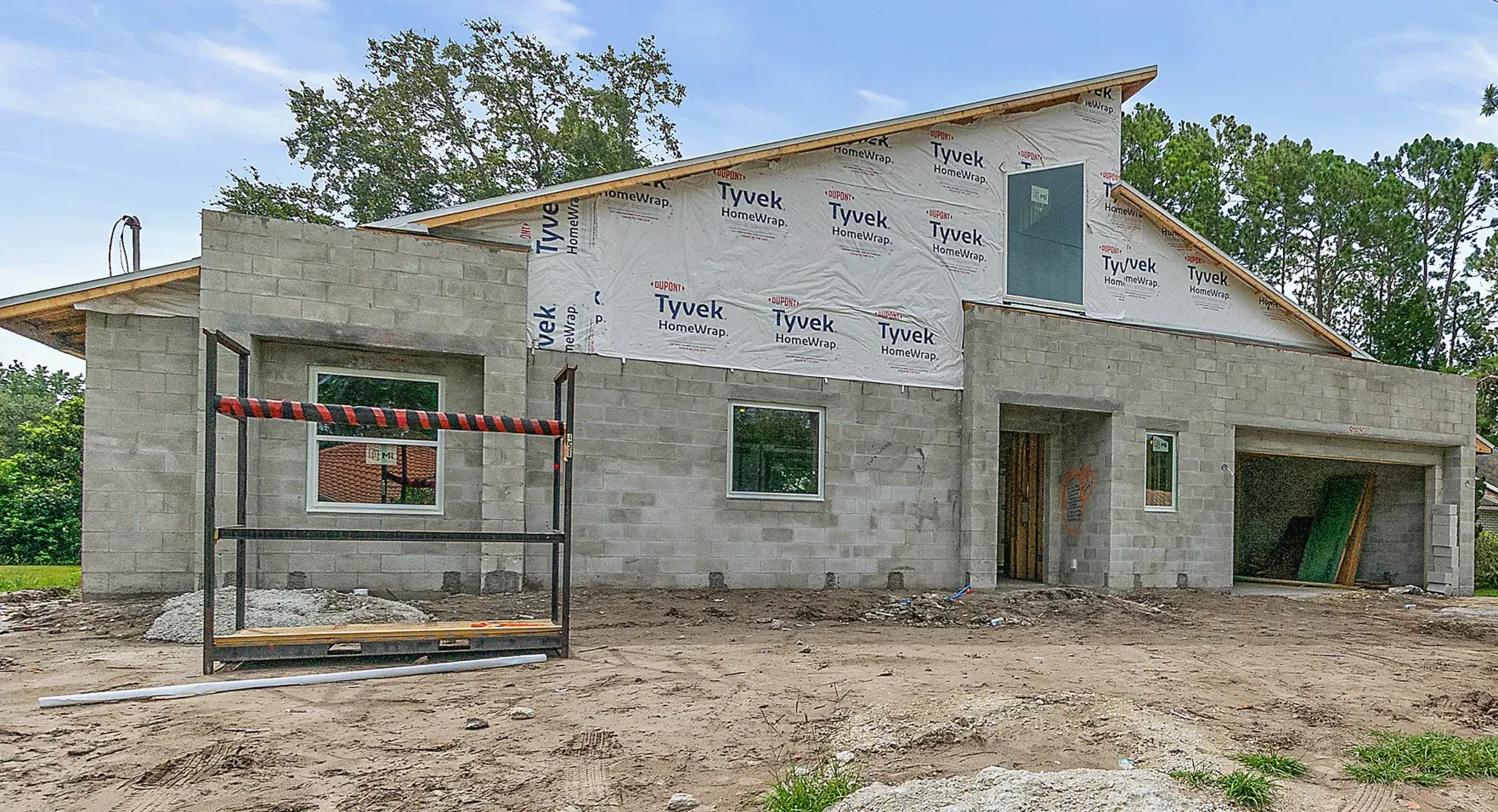
New Home Protection
Start with the stage your home has reached.
A new home changes as construction moves forward, and what can be observed changes with it. Choose the inspection point that matches where your build is now.
- Pre-Drywall Inspection Rough systems in · Walls still open Visible framing and major rough systems can be observed and documented before insulation and drywall conceal much of the work. Explore Pre-Drywall
- New Construction Final Inspection Construction substantially complete Once construction is substantially complete, Witness Point documents visible and accessible conditions in the finished home before final acceptance or closing. Explore Final Inspection
- Reinspection When needed · After work is reported complete A focused return visit to review specified previously reported items and document their current visible condition after work is said to be complete. Explore Reinspection
- 11-Month Builder Warranty Inspection Before an applicable first-year warranty deadline A later inspection documents current visible and accessible conditions that may have developed after move-in, before an applicable first-year builder-warranty deadline. Check your warranty documents for the dates and notice requirements that apply to your home. Explore 11-Month Warranty
Three roles · Three different purposes
Each role answers a different question.
A new home can be reviewed by different parties during construction. The builder, required permit inspections and Witness Point each serve a different purpose.
-
Builder
Manages the construction.
The builder coordinates the project, trades, sequencing and its own quality-control process as the home is constructed.
-
Required permit inspections
Serve the jurisdiction’s inspection process.
Required inspections address the jurisdiction’s building-code and permitting requirements at applicable stages of construction.
-
Witness Point
Provides a separate inspection for the client.
Witness Point independently examines and documents visible and accessible conditions at the inspection point, creating a written record for the client within the agreed inspection scope.
Witness Point does not supervise construction, replace required inspections or certify code compliance.
What changes as the home is built
What can be observed changes as construction advances.
An inspection can evaluate only what is complete, visible and reasonably accessible at that point in construction. Earlier stages expose work that may later be concealed; later stages allow the home and its installed systems to be observed in a more completed condition.
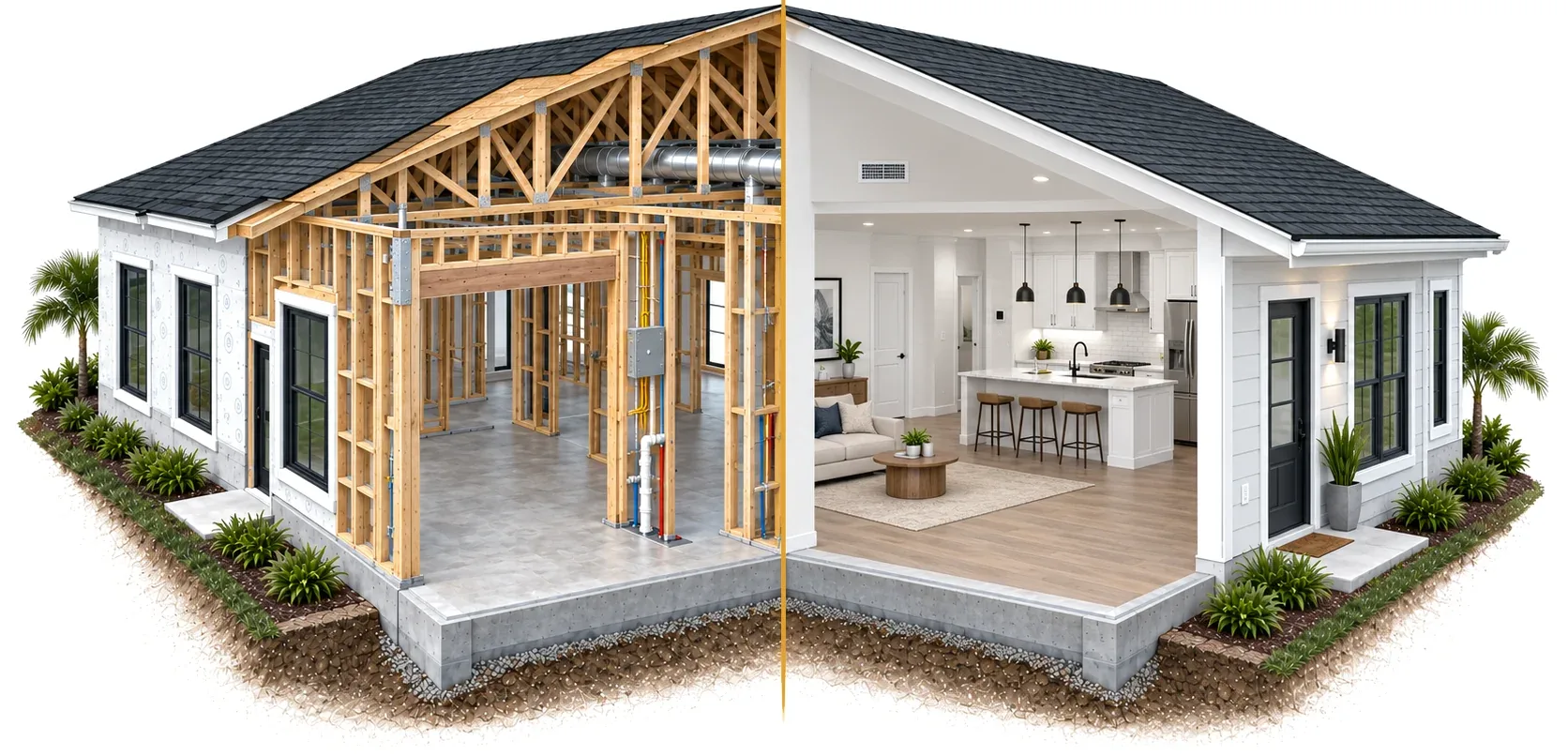
Open construction
More of the construction can be directly observed.
Completed home
Much of the earlier work is now concealed.
-
Before concealment
Exposed work can be observed directly.
Where construction remains visible and accessible, framing and rough systems can be examined before insulation, drywall and finishes cover much of the work.
-
After completion
The inspection question changes.
Once construction is substantially complete, finished surfaces, fixtures, controls and installed systems can be observed in their completed condition, while earlier work behind those finishes is no longer directly visible.
-
After move-in
Time can reveal different conditions.
Conditions can develop or become apparent as the home is occupied and systems are used, which is why a later first-year inspection is a separate observation point.
Each inspection point records what can be observed at that stage. A later inspection cannot recreate an earlier open-wall view once the work has been concealed.
How Witness Point communicates
Findings, documented.
At each inspection point, the written record should make three things clear: what was observed, why it matters in practical terms, and what the appropriate next step is.
-
Observed
What was visible, stated plainly.
Conditions are described as they appeared at the inspection point, without exaggeration or assumption.
-
Why it matters
The practical consequence, without drama.
The record explains why an observed condition is relevant in practical terms, without turning it into a conclusion the inspection does not support.
-
Next step
The appropriate action or further evaluation.
The next step may be correction, monitoring, or evaluation by a qualified specialist when the observed condition calls for it.
Context matters
Construction stage, completion, visibility and access affect what can be documented. A limitation should be identified as a limitation, not treated as though the work was inspected.
Inspection boundaries
A record of observed conditions, within a defined scope.
A new-construction inspection documents conditions that can be evaluated at a particular inspection point. What the inspection can establish depends on the stage of construction, visibility, access and the agreed scope.
-
At the inspection point
A point-in-time record.
Conditions are documented as they are observed during the inspection. The visit is not continuous construction monitoring and does not predict every condition that may appear later.
-
Visibility, completion + access
What can be evaluated depends on what is available to observe.
Work that is incomplete, concealed, inaccessible, unsafe or unavailable cannot be evaluated as though it were fully inspected. Those conditions should be identified as limitations.
-
Professional role
The inspection has a defined professional boundary.
Witness Point provides visual inspection and documentation within the agreed scope. It does not supervise construction, provide engineering analysis, certify plans or code compliance, or replace required permit inspections.
-
Action + responsibility
Documentation can inform the next step.
The report can support discussion and further action, but it does not direct the builder, guarantee correction, determine warranty coverage or enforce warranty obligations.
The inspection agreement defines the final service-specific scope, exclusions and limitations.
New Construction questions
Before you arrange an inspection.
Answers about inspection stages, builder access and first-year warranty timing.
Which inspection point should I choose?
Start with your home’s current stage. Pre-Drywall is for exposed framing and major rough systems before insulation and drywall conceal much of the work. Final Inspection is for a substantially complete home before final acceptance or closing.
Reinspection is a focused return to specified previously reported items when needed. The 11-Month Builder Warranty Inspection is a later inspection point before applicable first-year warranty deadlines.
Do I need to coordinate access with my builder?
Yes, while your builder controls access to the property. Confirm any notice requirements, the proposed inspection date, the expected construction stage and any deadline for sharing the report.
Permission and safe access need to be arranged before the visit, separately from the builder’s walkthrough. Scheduling an independent inspection does not by itself authorize entry to the site.
What if insulation or drywall is already installed?
An inspection can still consider what remains visible and accessible, but it cannot recover a concealed open-wall view. Insulation alone can cover framing and rough systems before drywall is installed. A visual, non-destructive inspection does not remove those coverings.
The appropriate inspection depends on the current construction stage. Once the home is substantially complete, Final Inspection is the relevant service to consider.
Is Final Inspection the same as the builder’s walkthrough?
No. A builder walkthrough or orientation introduces the home, reviews its features and provides an opportunity to discuss outstanding items. Required final inspections serve the jurisdiction’s permitting and code-enforcement process.
Witness Point’s Final Inspection is a separate visual inspection for you, documenting visible and accessible conditions before final acceptance or closing. It does not replace either process or certify code compliance.
When would I need a reinspection?
A reinspection may be useful after specified previously reported items are said to have been addressed. Witness Point revisits those items to document their current visible condition, subject to access and the agreed scope.
It can be relevant after Pre-Drywall as well as after Final. It is not automatically needed for every home, is not another full inspection, and cannot recover a view of work that has since been concealed.
Does an 11-month inspection determine warranty coverage?
No. The inspection documents observed conditions. It does not decide whether a condition is covered, enforce the warranty or guarantee builder correction. Coverage and notice requirements depend on the applicable warranty and law.
Check the warranty start date, relevant deadlines and reporting procedure early enough to arrange the inspection and submit concerns in time. “11-month” describes an inspection point, not a universal warranty deadline.
Should I wait until month eleven to report a concern?
No. Report concerns when you notice them, following the builder’s or warranty provider’s reporting procedure. Keep a written record and copies of your correspondence.
An 11-month inspection is a later opportunity to document conditions, not a reason to delay reporting them. Do not rely on an inspection booking or report alone to meet a warranty notice requirement. Urgent safety concerns or active damage need prompt attention.
Ready to schedule?
Know what you are accepting before the decision is final.
If you’re building a home, schedule an independent inspection at the point that matches your current construction stage.