Home Inspections
An independent inspection of the home or condo you’re considering.
Witness Point examines and documents visible and accessible conditions, then communicates what was observed, why it matters in practical terms, and the appropriate next step.
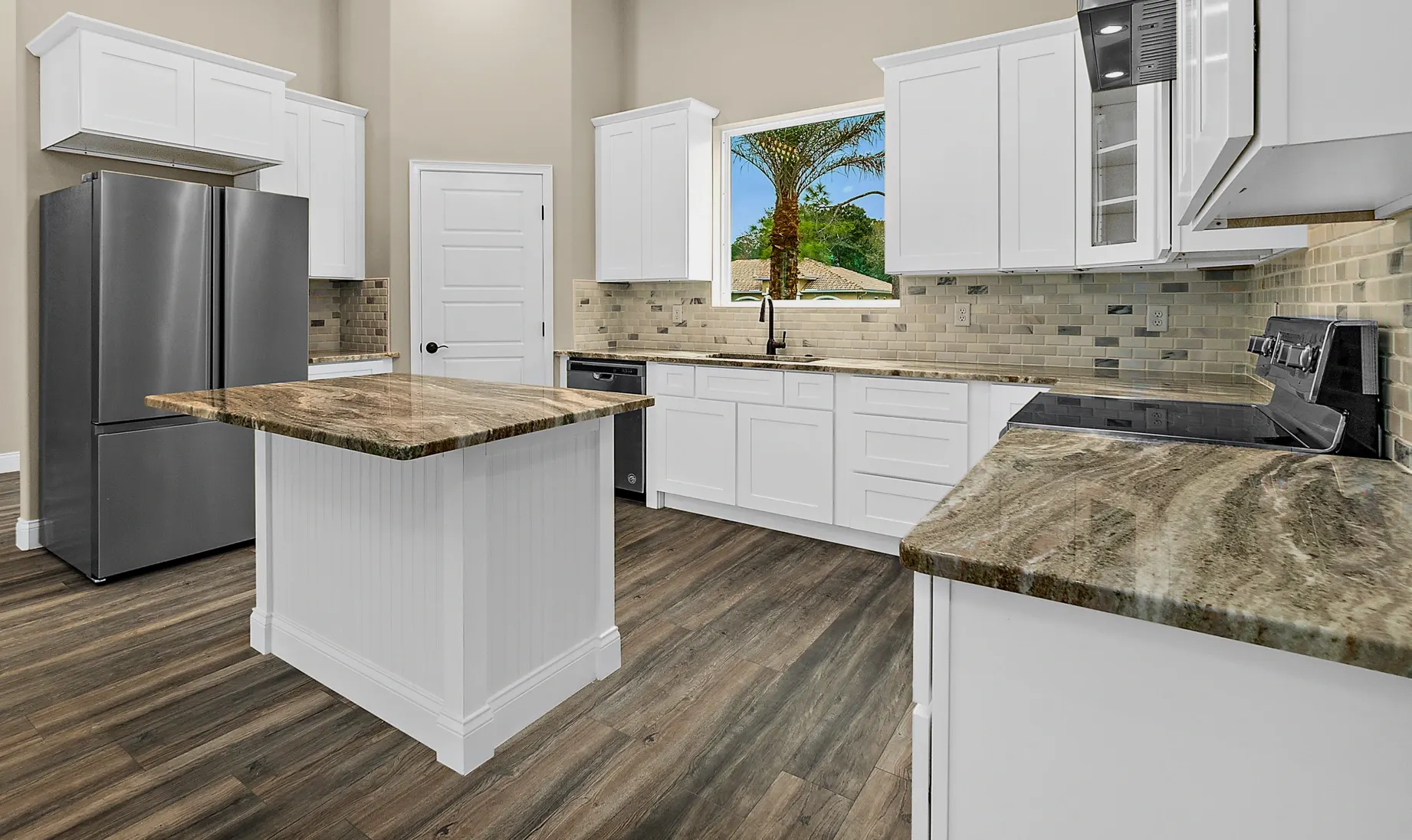
Buyer services
Choose the inspection that matches the property.
Both services are built around the same independent inspection approach. The main difference is the property boundary and what can be accessed.
- Buyer Home Inspection Buying a house or townhome? An independent inspection of the visible and accessible systems and components associated with the home. Buyer Home Inspection
- Condo Unit Inspection Buying a condominium? An inspection centered on the unit itself. Common elements and association-maintained areas are generally outside the unit inspection boundary. Condo Unit Inspection
The main difference
The inspection boundary.
A house and a condo can contain many of the same systems, but ownership, access, and responsibility are different.
Major systems & components
What a home inspection examines.
A home inspection examines the visible and readily accessible parts of the home’s major systems and installed components. It documents their condition at the time of inspection.
The categories below describe the general inspection framework. What applies depends on the property, access available at the time of inspection, and the agreed inspection scope.
For condominiums
A Condo Unit Inspection focuses on the unit itself. Condominium common areas are outside the normal unit-inspection boundary unless separately addressed.
-
Structure & foundation
Visible portions of the foundation and structural framing, including components that support the floors, walls, ceilings and roof.
-
Roof & attic
Roof coverings, flashings, roof penetrations and drainage components, together with visible attic insulation and ventilation.
-
Exterior
Exterior wall coverings, trim and doors, along with attached porches, decks, steps and railings.
-
Site & drainage
Visible grading, surface drainage, vegetation and retaining walls where their condition may adversely affect the home’s structure.
-
Electrical
Service equipment, electrical panels and visible wiring, plus a representative selection of accessible outlets, switches and installed lighting.
-
Plumbing & water heating
Visible water-supply, drain and vent piping, plumbing fixtures and faucets, and water-heating equipment.
-
Heating & cooling
Installed heating and air-conditioning equipment, accessible ductwork and air-distribution components, and normal operating controls.
-
Interior
Walls, ceilings, floors, stairs and railings, plus countertops and representative doors, windows and cabinets. Appliance coverage follows the agreed inspection scope.
This overview is not an exhaustive checklist. The inspection agreement defines the service-specific scope, exclusions and limitations.
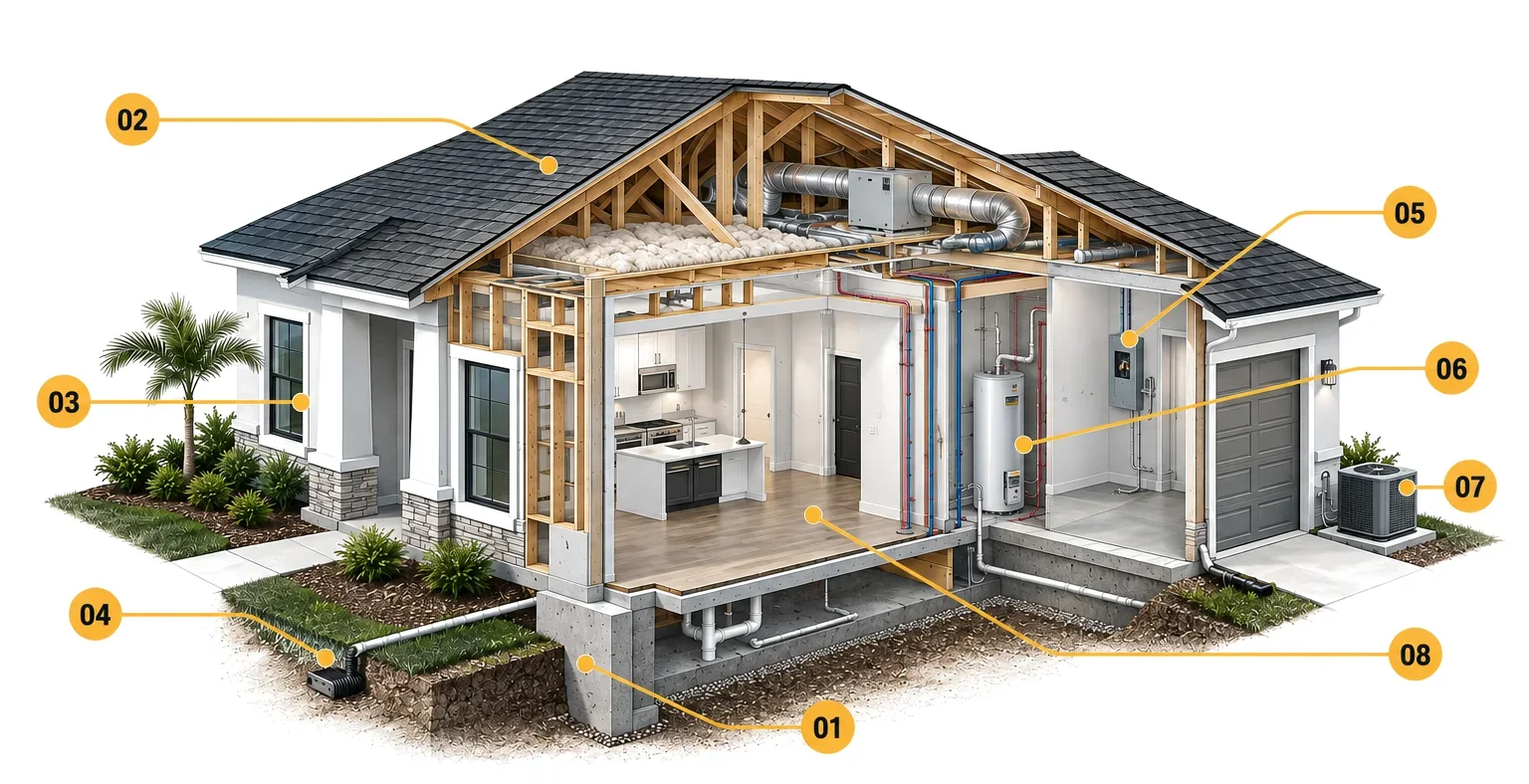
Systems at a glance
A visual guide to the major systems generally examined.
Visible + accessible
What can be inspected depends on what can be seen and safely reached.
A home inspection is visual and non-destructive. The inspector evaluates conditions that are visible and reasonably accessible at the time of inspection without removing finished materials or damaging the property.
Visible
A condition must be exposed enough to observe. Finished walls, ceilings, flooring, cabinetry and other installed materials can conceal parts of the structure or systems behind them.
An inspection does not open finished construction to see what is concealed behind it.
Accessible
An area or component must be reasonably and safely reachable under the conditions present at the inspection. Locked areas, stored belongings, restricted access, unsafe conditions or unavailable utilities can limit what can be evaluated.
When access is limited, the inspection should identify that limitation rather than imply the area was examined.
Conditions that can limit observation
Concealed construction, locked or blocked areas, stored belongings, unsafe conditions, and components or utilities that are unavailable at the time of inspection can limit what can be evaluated.
Inspection boundaries
What the inspection can and cannot tell you.
A home inspection documents visible and accessible conditions at a specific point in time. It is a visual, non-destructive evaluation, not a guarantee of future performance or a claim that every condition can be discovered.
-
Point in time
Conditions are documented as they are observed on the inspection day. Components and systems can change after the inspection.
-
Concealed conditions
Finished walls, ceilings, flooring and other installed materials are not removed to investigate what may be concealed behind them.
-
Access and safety
Areas or components that cannot be reasonably and safely reached may be limited or not inspected. Those limitations should be identified rather than treated as inspected.
-
Method
A home inspection is visual and non-destructive. It does not involve dismantling systems or damaging finishes to investigate concealed conditions.
-
Professional limits
A home inspection does not provide engineering analysis or certify code compliance, and it cannot guarantee that every defect or future failure will be discovered.
-
Further evaluation
When an observed condition requires expertise or testing beyond the inspection, the appropriate next step may be evaluation by a qualified specialist.
The inspection agreement defines the final service-specific scope, exclusions and limitations.
How Witness Point communicates
Findings, documented.
Clear reporting separates three things: what was observed, why it matters in practical terms, and the appropriate next step.
Observed
What was visible, stated plainly.
Why it matters
The practical consequence, without drama.
Next step
The appropriate action or further evaluation.
Buyer questions
Before you choose an inspection.
Which inspection should I choose for a house, condo or townhome?
The main difference is the inspection boundary. A Buyer Home Inspection considers the home’s visible and accessible systems and components within the agreed scope. A Condo Unit Inspection focuses on the unit; common areas are outside the normal scope unless separately addressed.
For a townhome, the ownership arrangement, maintenance responsibilities and access help determine the appropriate scope. The building’s appearance alone does not settle the choice.
When should I arrange an inspection during a purchase?
Arrange the inspection as early as practical after your offer is accepted and access can be coordinated. Leave time to review the findings and arrange any further evaluation before any inspection-related deadline in your purchase agreement. Confirm the applicable dates with your real estate agent or attorney.
Is a home inspection the same as an appraisal?
No. An appraisal provides an opinion of the property’s value. A home inspection examines the observable condition of its systems and components. They answer different questions, and an appraisal does not replace an independent home inspection.
What if I’m buying a newly built home?
For a new home approaching completion, start with New Construction Final Inspection. It documents visible and accessible conditions before final acceptance or closing. For a home still being built, the appropriate inspection depends on its construction stage.
Do you inspect outside St. Johns County?
Yes. St. Johns County is our primary focus, not an exclusive service area. We welcome inspection requests from Flagler County, Palm Coast and other surrounding communities.
Does Witness Point perform repairs?
No. Witness Point does not perform or offer repairs on homes it inspects. The company is paid to observe, inspect, document, and report, without a repair interest tied to what the inspection finds.
Ready to schedule?
Know what you are accepting before the decision is final.
If you’re considering a home or condo, schedule an independent inspection before you make the decision final.